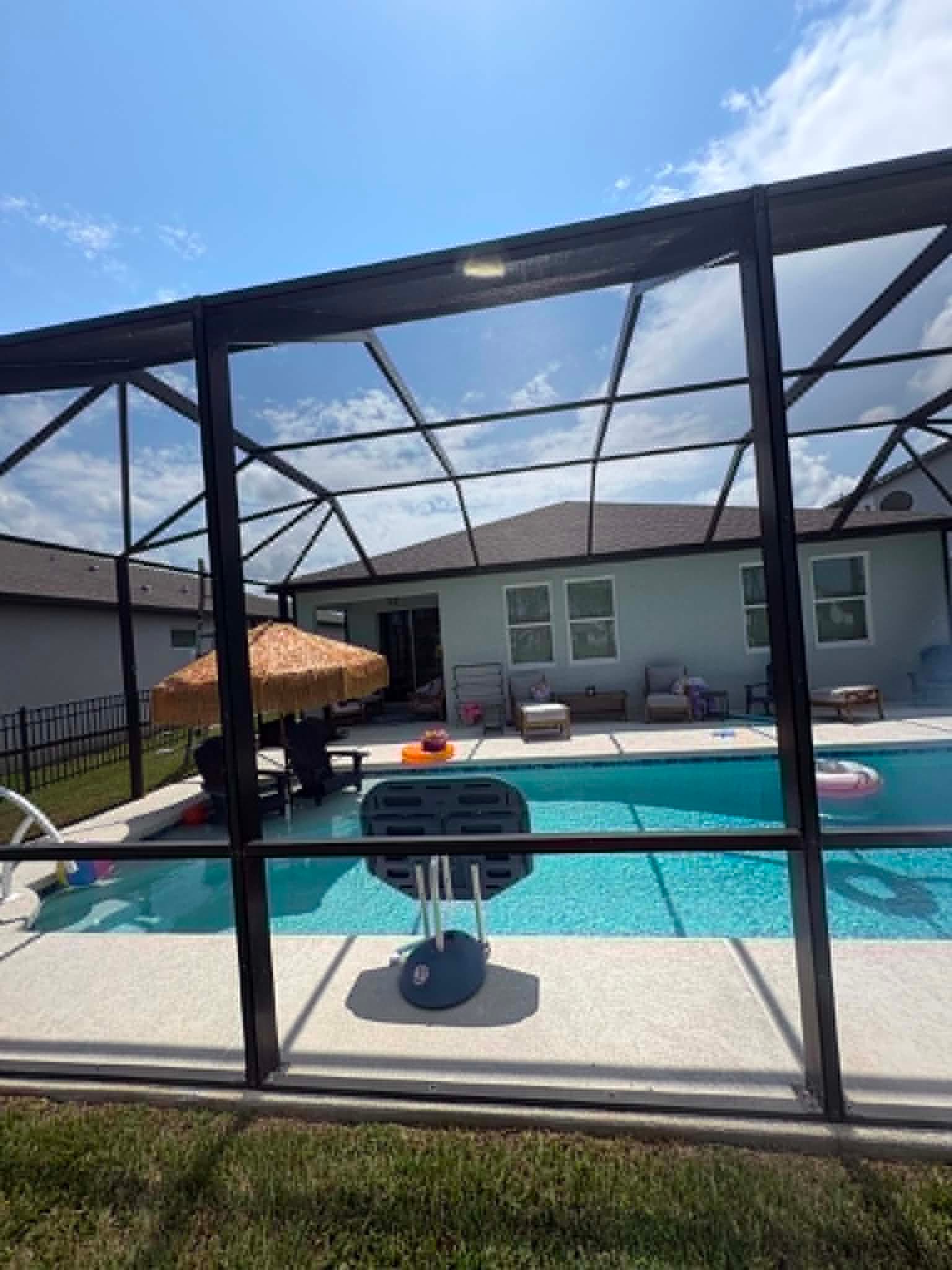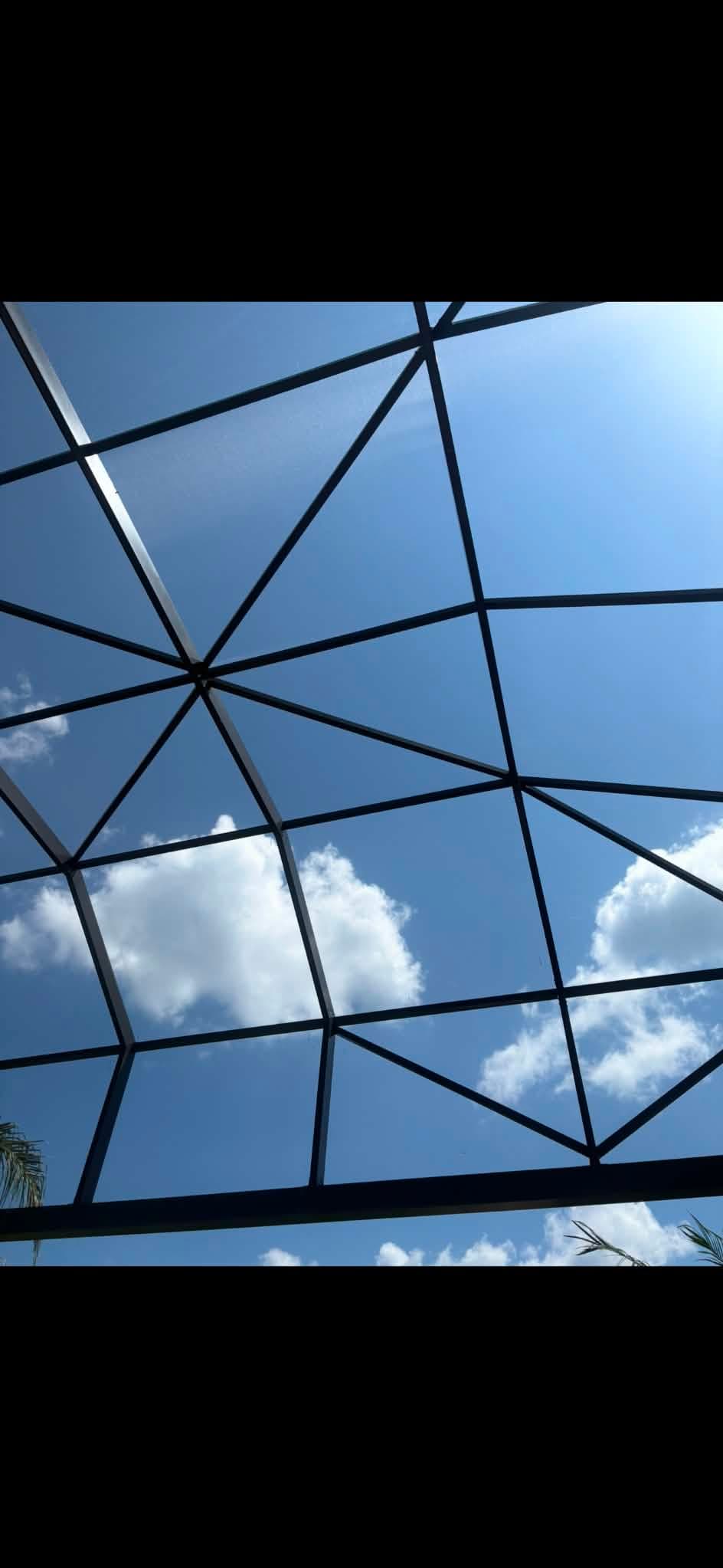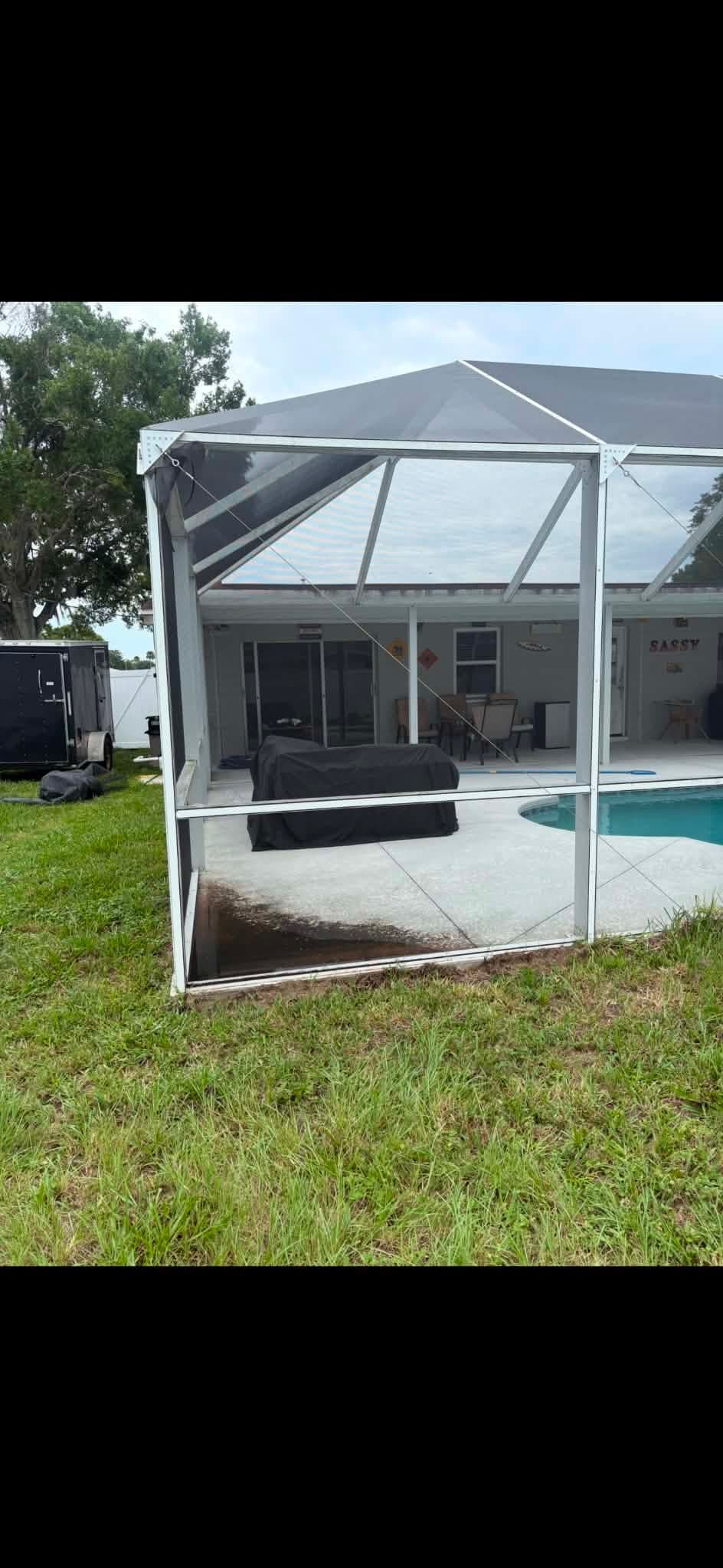
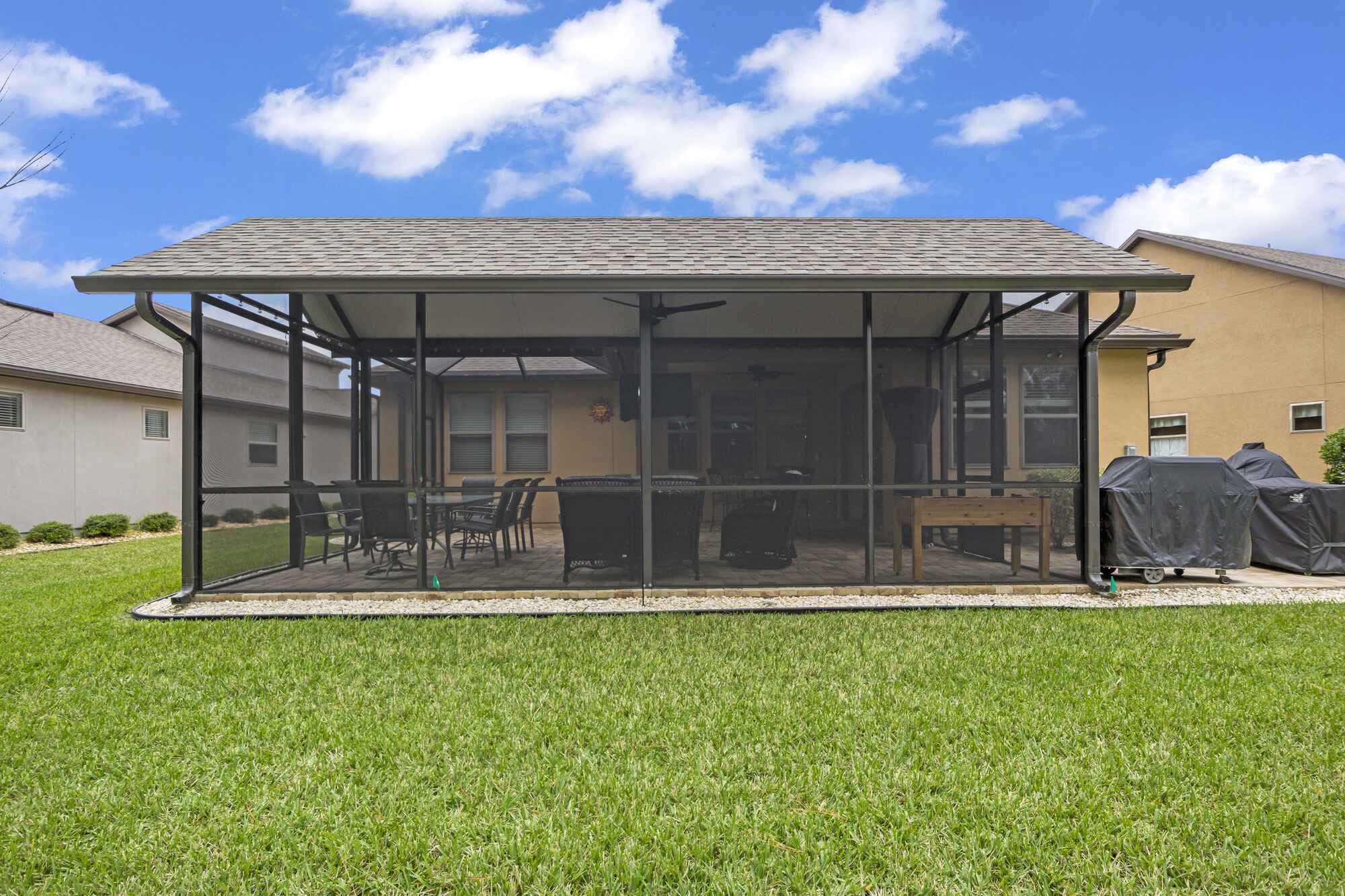
When you rescreen, the mesh you choose matters more than most homeowners realize. It affects how many bugs get in, how much breeze you feel, how private your pool is, and how long the screen lasts. Here is a plain-English comparison of the five options we install most.
1. Standard 18/14 fiberglass mesh
This is the default for most Florida pool cages — "18/14" refers to the number of strands per inch. It balances good visibility, strong airflow, durability, and cost. For most homes away from the coast or marshy areas, 18/14 is the right call.
Best for:
Most standard inland pools where the main goal is keeping out leaves, debris, and typical bugs at a sensible price.
2. No-See-Um 20/20 mesh
A tighter 20/20 weave designed to block the tiny biting midges ("no-see-ums") common near the Intracoastal and along coastal Volusia. It blocks the smallest insects standard mesh lets through. The trade-off is slightly reduced airflow and visibility.
Best for:
Homes near the river, marsh, or coast — anywhere no-see-ums are a problem. If your neighbors swear by it, there is a reason.
3. Pet-resistant mesh
A heavy-duty mesh woven from thicker, tear-resistant strands that stand up to dogs and cats pawing, leaning, and pushing on the screen. It is far stronger than standard mesh, with slightly reduced visibility.
Best for:
Pet owners — especially lower panels and door areas where animals make contact. Many homeowners use pet-resistant mesh on the bottom panels and standard mesh up high.
4. Privacy screen
A denser weave that limits sightlines into your pool area from neighbors or the street, while still allowing airflow. It darkens the view out somewhat, so many homeowners use it only on the panels that face a property line.
Best for:
Pools that back up to neighbors, roads, or community paths where privacy matters.
5. Solar screen
Solar mesh blocks a large percentage of UV and heat, keeping the enclosure noticeably cooler and reducing fading on furniture and decking. It reduces airflow and visibility more than other options, so it is usually used selectively on the sunniest exposures.
Best for:
West- and south-facing panels that bake in afternoon sun, or homeowners who want a cooler, shadier pool deck.
You can mix and match
You are not locked into one mesh for the whole cage. A common smart setup: pet-resistant on the lower panels, No-See-Um or standard up top, and solar on the western exposure. We will recommend the right combination for your specific home.
Quick comparison
- Best all-around value → 18/14 standard fiberglass
- Best bug protection → No-See-Um 20/20
- Best with pets → pet-resistant mesh
- Best for privacy → privacy screen
- Best for heat and sun → solar screen
Related Service
Pool Cage & Patio Rescreening
Torn, sagging, sun-rotted screens? Most full rescreens are done in a single day.
Explore Rescreening