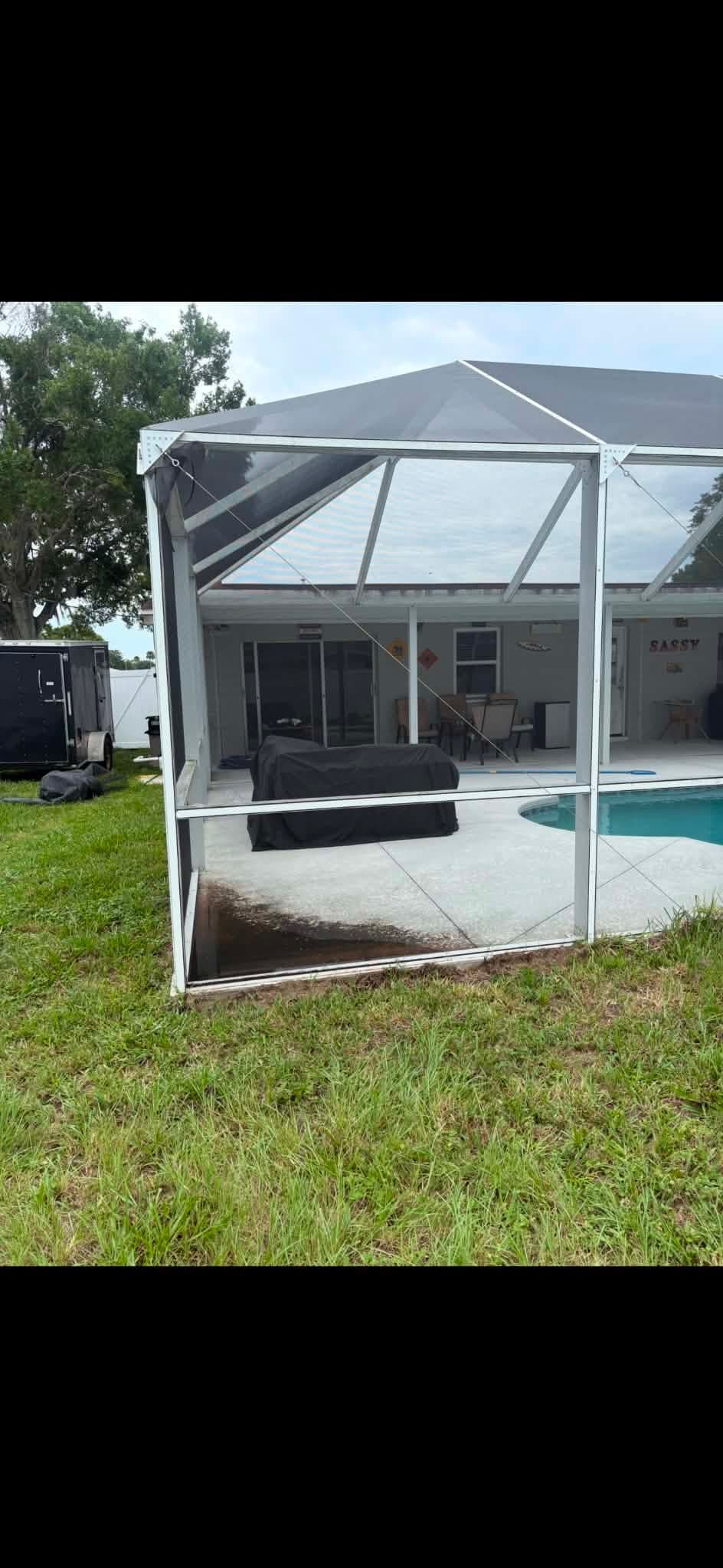
Florida building codes exist for one reason: hurricanes and tropical storms are real, and pool cages need to survive them without becoming projectiles that damage homes or injure people. When you rescreen or repair, code compliance matters — for your safety, your insurance, and your peace of mind during storm season.
What Florida code requires
Florida Building Code (now part of the Florida Administrative Code) requires pool enclosures built or substantially repaired after a certain date to meet minimum wind-load standards. The exact requirements depend on your county and when your cage was built, but the basic principle is consistent: the structure must remain standing and intact under wind forces typical of the area.
Wind-load categories
- Wind Zone 1 (Inland): 90+ mph design wind speed
- Wind Zone 2 (Coastal): 100+ mph design wind speed
- Wind Zone 3 (High-velocity hurricane zones): 120+ mph design wind speed
Volusia County falls into Zones 1 and 2, with coastal areas like Daytona Beach and New Smyrna in the higher wind-load zone.
What this means for rescreens and repairs
If your cage is being substantially repaired — meaning large sections are being re-built or the frame is being reinforced — Florida code may require upgrades to meet current wind standards. This typically means:
- Upgraded fasteners rated for higher wind loads
- Structural reinforcements to beams and connections
- Proper footings and anchoring if the base is compromised
- Updated hardware that meets current code
Screening note
A full rescreen (replacing only the mesh and spline) is usually not considered a "substantial repair" and does not trigger code upgrades. But if the frame is being reinforced or major structural work is done, code compliance kicks in.
Why code compliance matters
Three reasons to care about code:
- Safety: A code-compliant cage is more likely to survive a hurricane or strong storm without becoming a debris hazard.
- Insurance: If a code violation causes damage or injury, insurers may deny claims or refuse coverage on your home.
- Resale: Buyers and their inspectors will ask about code compliance. A cage that does not meet code can be a deal-killer or a negotiation point.
What to ask your contractor
- Does the scope of work require code compliance upgrades?
- Will you use fasteners and hardware rated for our wind zone?
- Can you provide documentation that the work meets current code?
- If upgrades are needed, what is the cost difference?
Licensed contractors know the code
Licensed, insured contractors in Volusia County stay current on building code. If you hire someone who waves off code concerns, that is a red flag.
The bottom line
Florida code exists because hurricanes are inevitable. A code-compliant pool cage is safer, more likely to keep your insurance intact, and more likely to survive the next storm. NXT Level Screening builds every repair and structural reinforcement to meet or exceed current code for your wind zone.
Related Service
Screen & Cage Repair
Torn panels, storm damage, rusted fasteners, a sagging beam — we get your existing cage tight and solid again.
Explore Repair